

It is said that there were more than a thousand secret agents in Stockholm during the war. They were mostly based in Östermalm and Gärdet, where the Swedish military was training. Swedish intelligence activities were concentrated near Karlaplan and Valhallavägen. < Wikipedia > A good starting point is the Stadion metro station on the Mörbybanan line. Bus stop Jungfrugatan. More specifically, Valhallavägen 132 < Google Maps >

Valhallavägen 132
In 1940, the C-office moved into an anonymous three-room apartment four flights of stairs up at Valhallavägen 132. The choice of an ordinary apartment in a residential building was made for security reasons. The C-office , then known as the G-office or the Border Office, was the secret facade of the Swedish military intelligence service. The office’s legendary second-in-command Helmuth Ternberg recruited women to the ”Secretaries’ Club” < video > who seduced foreign diplomats and agents. Ternberg’s main recruit was Erika Wendt / Schwarze, who worked for the German military spy organization Abwehr in Stockholm. < Wikipedia > < Google Maps > < Streetview >

- The organization was led by Major Carl Petersén , whose first name gave rise to the name C-byrån .
- There were few permanent staff at the address. The apartment served as an operational hub where, among other things, intelligence gathering, espionage and the recruitment of agents were planned and handled.
- The operation relied largely on a network of informants in Stockholm’s nightlife and diplomatic circles. Among the more well-known people connected to the intelligence work during this period is Karin Lannby , < video > who picked up rumors from cafes and restaurants.
- After a while on Valhallavägen, the premises were too small. In 1942, the office moved to new premises on Sibyllegatan 49 , where the office operated until it was closed down.
Erik Dahlbergsgatan 12
Stig Bergling used Handelsbanken’s safe deposit box at Erik Dahlbergsgatan 12 to hide copies of classified Swedish documents. He worked in the Defence Staff’s security department at Östermalmsgatan, where he gained access to the fortification code. It contained information about:
- Swedish defense installations and coastal artillery fortifications.
- Mobilization depots and command centers.
- Radar stations and other military installations.
< Wikipedia > < Google Maps > < Streetview >

The bank account gave Bergling the opportunity to store documents without having them at home or at work. It was a way to keep the material available during his overseas service.
Östermalmsgatan 87-89
Before the Defence Staff moved to Lidingövägen in the early 1970s, operations were conducted in the Grey House, which was called the Generalitetshuset . During the war, shelters were built under the house from which the ÖB and the staffs would lead the war effort. < Wikipedia > < Google Maps > < Streetview >

In the “Gray House” was Department U (Intelligence Department) within the Defence Staff, led by Lieutenant Carl Petersén (1883–1963). The department was responsible for military intelligence and collaborated with the C-Office (the secret intelligence service under Prime Minister Per Albin Hansson). The C-Office had several apartments in Östermalm as cover addresses, but the formal intelligence operations were led from Östermalmsgatan 87. V
The most famous spy case connected to the address concerns Allan Nyblad (1916–1994), a Swedish orderly/bicycle courier who worked transporting secret documents. Nyblad’s task was to cycle with decrypted German telegrams from the cryptographic department at Karlaplan 4 to the Defence Staff at Östermalmsgatan 87 – a distance of approximately 400 metres. The messages came from the German G-scriber (an encryption machine similar to Enigma), which Swedish mathematicians under Arne Beurling had already managed to crack in 1940. < info >
Nyblad, who had communist sympathies, was recruited by the Soviet intelligence service (GRU). On the way to the “Grå huset” he slipped into a rented apartment where he steamed the envelopes, photographed the contents and then delivered the documents. Through this, Alexandra Kollontai, the Soviet ambassador in Stockholm, gained access to Sweden’s most secret intelligence material and was able to send it to Moscow. The espionage was exposed in January 1942, less than a year after it began. Allan Nyblad and his brother Knut Nyblad were sentenced on 12 April 1943 to 12 years of hard labor for espionage. The leak meant that the Soviet Union learned that Sweden had succeeded in deciphering German traffic – one of the best-kept Swedish secrets of the war. < Wikipedia >
Olof Palme
Olof Palme was a lieutenant in the reserve at the K 3 cavalry regiment. Then in 1953 he was employed by the Defence Staff, for its intelligence operations. He had his own room in the “Grå huset” Östermalmsgatan 87 – recruited by the Nazi-minded officer Lennart Hagman . At the same time, Palme was the student union chairman and was able to report from international conferences both to employers and the American CIA.
Tage Erlander noticed Palme and called him to the Chancellery in the autumn of 1953, to become the Prime Minister’s personal assistant/secretary. However, Palme did not want to give up his position at the Defence Staff. For a time, he worked part-time for Erlander while maintaining his position at Östermalmsgatan 87. In this way, he became a key person between the Government Chancellery, the Grey House and American intelligence.
It was the year after a Russian MIG-15 shot down a Swedish Defence Force DC-3 over international waters east of Gotland. The crew consisted of three Air Force personnel and five signals intelligence officers from the Swedish Defence Radio Agency (FRA) . Stig Wennerström had probably tipped off the Soviets that the signals intelligence was being shared with the USA.
Stig Wennerström
Colonel Stig Wennerström was employed in 1957 as a flight officer at the Swedish Armed Forces Command Expedition, probably at Storkyrkobrinken 14 in the Old Town. This meant frequent contact with the Swedish Defence Staff on Östermalmsgatan and access to the secret archives there.
The Defence Staff had already requested a personnel check on Wennerström in 1943. The Security Service then stated that he was on its register. He had contact with the Soviet citizen Nikitouchev and was under control. In the summer of 1943, a special register card was created for Wennerström at the Defence Staff’s internal affairs department. < video >
In August 1960, the Security Service learned that Wennerström had visited the Foreign Affairs Department of the Defence Staff once a quarter since 1957/58, where he had official contacts with the Defence Staff’s intelligence organization. Surveillance of Wennerström was initiated and he was arrested in 1963.
Stig Bergling
Stig Bergling began his police career at Östermalm police station, which was then located at Linnégatan 5–7 in Östermalm. In an interview, Bergling himself described that he saved the folder “for a rainy day”. According to Sveriges Radio, he stated that he had copied the documents because the security procedures at the Defence Staff were inadequate and the copies were not checked carefully enough. < video >
- 1971 – The copying: Bergling copied the secret folder while serving at the Defense Staff’s security department and locked the copy in the bank safe.
- 1972 – Contact with the GRU: While on UN duty in the Middle East, he came into contact with the Soviet GRU officer Alexander Nikiforov at the embassy in Beirut. He offered him the Swedish documents.
- November 1973 – The collection: Bergling arranged an exchange of service passports with a Belgian UN major in order to travel to Stockholm and collect the folder from the bank safe.
- November 30, 1973 – The handover: He returned via Budapest to Beirut and handed over the material to Soviet intelligence.
Karlaplan

The place was formerly called l’Étoile after the model at the Arc de Triomphe, as the center of wide avenues. Not for cannon range as in Paris but Karlaplan was planned in 1885 for aesthetic reasons. Although the war made itself felt here during the war. Wood piles here and there. Cabbage was grown in beds around the pond where the children splashed. < Wikipedia > < Google Maps > < Streetview >

This happened at Karlaplan in August 1944. Jane Horney was seen on a bench nearby. At a newsstand, the German legation counsellor Heinz Thorner stood and pretended like nothing had happened. < video >
Suddenly the couple walks towards a yellow-black DKW parked on the corner of Karlaplan 7 and Karlavägen. Admittedly, Horney was recruited by Helmuth Ternberg to the military C-office . The observation at Karlaplan was still enough to see her as a double agent. And thus a death sentence for the arquebusiering in a fishing boat on the Sound.

The C-Agency had a secret office at Sibyllegatan 49 and an annex at Karlaplan 4. Like so much else in the world of agents, the evidence is contradictory.

The diplomatic car sped away, followed by a cyclist, a Danish-speaking resistance fighter who had managed to photograph the couple. According to one version, she wanted Thorner’s help in freeing Danish resistance fighters from prison. We learn how it all went down during the walk to Rindögatan 42 in Gärdet.

Karlaplan 4
At one end, at Karlavägen no. 59, the German legation’s radio department transmitted encrypted information. Near the other end of the street, on the fourth floor of Karlaplan 4 (where the Maxim Theater is now located), German telegram traffic was decrypted on the telephone network between Norway / Finland and the German legation on Blasieholmen. The telegrams were sent with German Geheimschreiber , called the G-writer (Siemens T52). Germany used the system for military traffic between Berlin and the German forces in Norway and Finland. < Wikipedia > < Google Maps > < Streetview >

In the summer of 1940, the Swedish mathematician Arne Beurling managed to figure out how the crypto worked. Then, special Swedish devices connected to teleprinters were able to convert the intercepted cryptotext into plaintext. The staff at Karlaplan typed this in and received the telegrams on strips of paper. During the continued operation, large quantities of decrypted German messages were produced. They were sorted and processed and then forwarded to the Defence Staff at Östermalmsgatan 87, “Grå huset”.
This is where the bicycle messenger Allan Nyblad comes into the story. From 1941, he transported the secret plaintext telegrams on his parcel rack from Karlaplan 4 to the “Grå huset” on Östermalmsgatan 87. The Russians rented an apartment along the bicycle path where Nyblad steamed the envelopes and took photographs with the camera he had received from the legation on Villagatan. From there, the photos were sent to the Soviet Union by courier.
Banner Street 37
The Norwegian legation/embassy moved here from Strandvägen in 1940. At the end of the war, a thousand Norwegian resistance fighters were administered from here. The legation on Banérgatan became a center for the Norwegian exile during World War II. Refugee issues, intelligence and military activities were coordinated there. Contact was maintained with the Norwegian resistance movement and the government in exile in London.

Strandvägen 82
The British Legation rented the so-called Bulowska villa in Diplomatstaden, at what was then Strandvägen 82, now Dag Hammarskjöls väg 20. The Swedish State Police kept watch over the house where an intelligence operation was SOE, Special Operations Executive.
The British SOE operations were located at Strandvägen 82, while SIS had a more discreet office at Birger Jarlsgatan 12. Malcolm Munthe used his official role as British military attaché as a cover and worked with SOE’s sabotage and resistance activities. He had contacts with Norwegian resistance circles, among other things.
A mysterious British contact man “Mr.R.” is said to have met Jane Horney at this address. The address also served as a point of contact between the British and the Norwegian intelligence circles . During the Bismarck Crisis in 1941, the Norwegian military attaché Alfred Roscher Lund made contact with the British at Strandvägen 82, after which the information was passed on to London. The Norwegian military attaché Alfred Roscher Lund passed information to the British at Strandvägen 82, who then passed it on to London.
Riddargatan 51
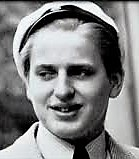
Olof Palme
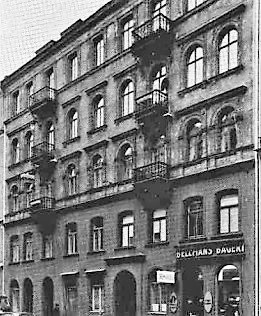
To support herself, the widow Augusta Ternberg had a tenancy in the apartment at Riddargatan 51. She was born in Latvia and often had tea parties for exiled Baltic friends, which her son Helmuth Ternberg continued after her death. One of Augusta’s guests was Elisabeth von Knieriem , who brought her son Olof Palme. < Wikipedia > < Google Maps > < Streetview >
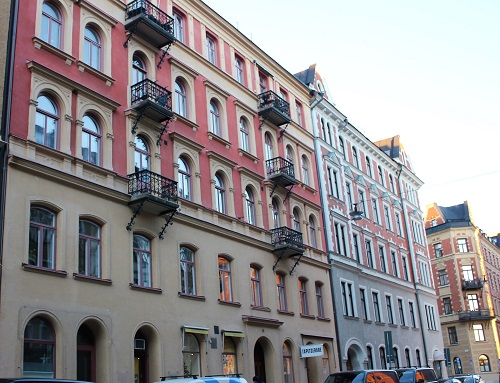
Riddargatan 51. Photo Ingemar Lindmark
As early as 1938, a friendship arose between twelve-year-old Palme and retired captain Helmuth Ternberg, 45 years old. Both were maternally related and had dead fathers, which could explain a father-son relationship. The Baltics were relevant because their mothers came from Latvia.
In 1944, Palme graduated from Sigtuna, celebrated by Ternberg, who offered the new graduate a job in the sports department of Svenska Dagbladet. Perhaps it was Ternberg who inspired Palme to become a secret agent in 1953 at the Swedish Defence Staff’s intelligence agency on Östermalmsgatan.
Ternberg
During World War II and the early Cold War, the naval captain, naval attaché and one of the heads of the Swedish military intelligence service (C-office), Helmuth Ternberg, lived at Riddargatan 51.
The apartment at Riddargatan 51 practically functioned as an unofficial extension of the Swedish intelligence service. Swedish agents, Norwegian and Danish resistance fighters, as well as German defectors and Baltic refugees met here in discreet settings.
After the war
During the first post-war years, the address became a hub for people fleeing the Soviet occupation of the Baltics. Through Ternberg and the C-office’s frequent contacts with Baltic resistance fighters and intelligence officers, apartments and contacts in the neighborhoods around Lower Riddargatan and Strandvägen were used as gateways for information, microfilms, and refugees trying to avoid extradition or Soviet KGB agents.
Since the address was just a stone’s throw from what would become the center of military headquarters and diplomatic missions in Östermalm, the gates at Riddargatan 51 were often used for “closed meetings” – that is, meetings that needed to be held completely outside of official state protocol. During the frostiest years of the Cold War in the 1950s and 60s, the neighborhood was kept under surveillance by both Säpo and foreign intelligence services due to the remaining contact networks from the war years.
Banérgatan 4
During World War II, the neighborhoods around lower Banérgatan and Strandvägen were transformed into a key hub for the Norwegian government in exile and the Home Front.
To smuggle couriers, hide secret radio equipment and maintain contact with the Swedish intelligence service (C-byrån), several private mansions were used as “safe houses” and cover addresses. Banérgatan 4, with its strategic location near Djurgårdsbron and the quays, was an ideal spot for unobserved meetings at dusk.
The official Norwegian legation was located on Banérgatan (between Karlavägen and Linnégatan) and was the headquarters for the administration of thousands of Norwegian refugees and resistance fighters.
During the Cold War (1950s–1980s), the area changed its character from a cover address during the war to a surveillance zone for the Swedish Security Service (Säpos) and the military . With its proximity to several foreign embassies and the military headquarters further up Östermalm, the houses in the lower part of Banérgatan were subject to regular “counter-espionage surveillance”. The Säpos counter-espionage Russian secret service kept track of who moved between the Soviet/Eastern Bloc-related diplomats’ residences and the meeting places down by the quays of Strandvägen.
With five million copies sold from about ten Hamilton books, Jan Guillou could afford to live with Anna Skarp in the apartment in the finest Östermalm, Banérgatan 4 to be precise. At a convenient distance from their Piratförlaget at Kaptensgatan 6 – in the house where Goebbels’ propaganda center during the war sought to nestle the Swedish cultural elite. The literary figure Captain Carl Hamilton also lived in Östermalm during his studies and was at the same time a socialist in Clarté. < Google Maps > < Streetview >
Much of Hamilton is recognizable in Guillou. During the year the FiB journalist was imprisoned for exposing social democratic collaboration in the military’s IB, he wrote his first book, If War Comes. The author and the novel’s character have in common that both have worked for the KGB for pay .
Storgatan 59
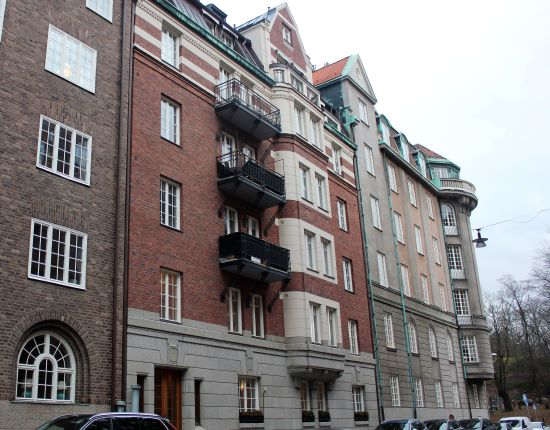
Olof Palme later wrote about the memory of a tea party at his uncle’s house where Gilel Storch and Felix Kersten talked about a rescue operation for prisoners in the concentration camps. The place was Ottokar von Knieriem ’s apartment at Storgatan 59 and the year was 1944 when Palme graduated. Uncle von Knieriem had also been exiled and was in charge of the Dresdnerbanken branch on Kungsträdgårdsgatan. Otto had problems with his hip and was therefore a patient with Kersten. < Wikipedia > < Google Map s> < Streetview >
Olof’s mother Elisabeth, born Knieriem, took care of Otto in Stockholm. As a German-born and educated in Germany, it was natural for her to participate, together with Princess Sibylla, in an association that sent gifts to soldiers on the German front. But she was not a Nazi sympathizer, like some of her relatives in Germany.
As a masseuse, Kersten had close contact with Heinrich Himmler and also with the Swedish Foreign Minister Christian Günther, who wanted to have the imprisoned Swedish directors in Poland released. Execution was threatened because they had testified to the outside world about the extermination of the Jews.
It is unclear how much of a Nazi von Knieriem was. But his boss at the bank, SS member Karl Rasche , was – an SS member who used to stay with Knieriem on Storgatan during his visits to Stockholm. The bank handled SS financial transactions.
Rasche was sentenced to seven years in Nuremberg. The Allies protested that after the war von Knieriem was granted Swedish residence, which he obtained thanks to the assistance of the Wallenberg brothers and Olof’s brother, the lawyer Claës Palme. Olof Palme’s most vivid memory from the tea party was how the corpulent Kersten spooned orange marmalade into her mouth.
Skarpogatan 9
On April 24, 1975, the German Embassy at Skarpögatan 9 was occupied by six armed terrorists from the Red Army Faction (RAF), also known as the Baader-Meinhof Gang. The hostage-taking lasted for about twelve hours and claimed four lives: two embassy employees and two terrorists. < Google Maps > < Streetview > < Wikipedia > < video >

At 12:00, six people – five men and one woman – forced their way into the embassy, armed with submachine guns and 15 kilograms of TNT. They took twelve to thirteen people hostage, including Ambassador Dietrich Stoecker, and forced them into a library room at the top of the building.
The terrorists, who called themselves “Commando Holger Mein”, demanded that the West German government release 26 convicted RAF members (including Andreas Baader, Ulrike Meinhof, Gudrun Ensslin and Jan-Carl Raspe), provide a Boeing 707 at Frankfurt Airport and give them USD 20,000 each and free them along with the Swedish ambassador to Bonn.
- During the occupation, terrorist Karl-Heinz Dellwo shot dead military attaché Lieutenant Colonel Andreas von Mirbach and commercial attaché Heinz Hillegaart inside the embassy.
- At 23:47, a TNT charge detonated inside the embassy, probably by mistake. The explosion killed the terrorist Ulrich Wessel on the spot and injured several others. The surviving occupants tried to escape through a bomb hole but were immediately arrested by Swedish police on Swedish soil outside the embassy area.wikipedia+2
- A total of fourteen people were injured in the attack, including seven police officers and nine hostages. The sixth terrorist, Siegfried Hausner, died of his injuries just over a week later in West Germany.wikipedia+2
- The four surviving occupiers (Hanna Krabbe, Karl-Heinz Dellwo, Lutz Taufer and Bernhard Rössner) were extradited to West Germany, where they were sentenced to two life sentences. They were later pardoned and released between 1994 and 1996. The day after the attack, the Swedish government decided to deport all terrorists under the so-called Terrorist Act.
Strandvägen 82 / Dag Hammarskiölds väg 20
During the war, the British legation rented the Bulowska villa in Diplomatstaden at the end of Strandvägen. The house was carefully guarded by the state police, hidden among the trees where the Radio House now stands. The legation’s staff increased from four to four hundred, although some were scattered around the country. About a hundred belonged to the intelligence service. Today, the Turkish embassy is located there at the new address Dag Hammarskiölds väg 20. < Wikipedia > < Google Maps > < Streetview >
British Ambassador Victor Mallet did not like to have Malcolm Munthe of the Special Operations Executive in the house because espionage and sabotage have no place in classical diplomacy. Sabotage in Norway was well tolerated. But when a German ammunition train was blown up in Krylbo in the summer of 1941, SOE was suspected and the head Malcolm Munthe was expelled. < Wikipedia > < Google Map s> < Streetview >
Strandvägen 82 (today the address Dag Hammarskiölds väg 20) in Diplomatstaden was the seat of the British legation during World War II. The house, known as , was rented by Great Britain and was closely guarded by the Swedish state police.

Malcolm Munthe had official cover as deputy military attaché at the British legation at this address. In reality, he ran SOE sabotage operations against occupied Norway from there. The legation’s staff grew from four to around four hundred during the war, of which around a hundred were intelligence officers.
Malcolm was a Swedish-English man, the son of Axel Munthe , physician and perhaps lover of Gustaf V’s wife Victoria. With the title of military attaché as cover, he prepared a Swedish resistance movement in collaboration with the writer Amelie Posse’s Tuesday Club. After his expulsion, he led motor torpedo boats from Capri during the Italian invasion, where he was at home thanks to his father.
The legation had close connections with the Norwegian military offices, but not all operations were located at the same address. After the war, the legation continued to be located at the address until 1951.
Kai Holst , who was found shot on Rindögatan, was connected to the Norwegian legation’s military operations in Stockholm. He worked there with couriers and supplies for Milorg. One of about eighty employees in the legation’s Press Office was Calota Brandt, then the wife of Willy Brandt.
/ By Ingemar Lindmark

- By Ingemar Lindmark
